Micro Needling

Seasonal Swaps: When to Trade Your Cream for a Gel in Your Skin Care
As the seasons change, so should your skincare routine. Your skin responds to the environment around you, and the products that work in one season might not be as effective in another. The shift from cooler months to warmer weather, for example, can affect hydration, oil production, and even skin sensitivity. That’s why swapping your creams for gels, or vice versa, can make a significant difference in maintaining a healthy, balanced complexion year-round.
One common seasonal switch involves trading your richer creams for lighter, gel-based products. Why does this matter? Well, understanding how different weather conditions influence your skin is key to choosing the right products. This post will explore when and why it’s essential to swap creams for gels, and how this can help you achieve the best skin care results all year long.
How Seasons Affect Your Skin
Each season brings a change in temperature and humidity, which can have a significant impact on the condition of your skin. During the winter, colder temperatures and low humidity levels can leave your skin feeling dry, tight, and flaky. In these months, your skin may struggle to retain moisture, making heavier creams essential for replenishing lost hydration. Rich, emollient creams lock in moisture, providing a barrier against the harsh, drying winter air.
Conversely, summer brings higher temperatures and increased humidity, which can result in excessive oil production. In this warmer climate, your skin may become greasy, clogged, or even breakout-prone. The heavy creams that worked in the winter can now feel too thick and suffocating.
Your skin may need a lighter touch; enter gel-based products, which offer hydration without the greasy residue. Gels, often water-based, provide a refreshing, cooling sensation, helping to balance oil levels and keep your skin feeling fresh and breathable.
The changing humidity also influences how your skin reacts. In dry climates or air-conditioned environments, your skin may become dehydrated, needing products that offer moisture retention.
But in humid climates, the last thing you want is a rich cream that can clog pores or make your skin feel weighed down. Seasonal changes call for tailored skincare in New Town, Kolkata, that addresses these unique needs.
What Are Creams and Gels?
When it comes to skincare, understanding the difference between creams and gels can help you make the right choice for your skin type and the season.
Creams are typically thicker, richer formulations designed to provide intense hydration and nourishment. They contain oils and emulsifiers that create a barrier to lock moisture in.
Creams are ideal for people with dry or sensitive skin, or during the winter months when the air is harsh and dehydrating. They provide a heavier consistency that works to hydrate and protect the skin from environmental damage.
Gels, on the other hand, have a much lighter consistency. They are often water-based and absorb quickly into the skin, offering a refreshing sensation. Gels are typically used for oilier or acne-prone skin types, as they hydrate without adding extra grease. They are also perfect for humid climates or warmer weather, where the air itself can provide some moisture, but you still need a lightweight formula to maintain balance.
Ingredients like aloe vera or hyaluronic acid are commonly found in gels, providing soothing, hydrating benefits without the heaviness of a cream.
Both products have their place in skincare routines, depending on the season and skin needs. Creams work wonders for nourishing and protecting skin, while gels can refresh and hydrate without clogging pores.
Why Swap Creams for Gels in Certain Seasons?
Switching from creams to gels during the warmer months or more humid weather can be a game-changer for your skin. Creams, while excellent for hydration, can feel heavy when applied in summer, making your skin appear shiny or greasy.
Instead, a gel-based moisturizer or serum can offer hydration without the added weight. The lightweight texture of gels ensures that your skin stays moisturized while still feeling fresh, especially in the heat.
One key advantage of gels is their ability to balance oily skin. When your skin produces more oil due to the warmer weather, gels help control that oil without drying the skin out. They provide just enough moisture, preventing excess oil buildup and reducing the likelihood of breakouts. Gels can also help to soothe irritated skin and keep it calm, especially when combined with cooling ingredients like cucumber or aloe vera.
Another reason to swap to gels during the summer is the cooling effect they offer. After spending time in the sun, a gel moisturizer can feel incredibly refreshing, instantly hydrating and calming your skin after exposure to heat. This cooling sensation can also reduce inflammation, which may be helpful if you’re dealing with sunburns or skin sensitivity.
When to Stick with a Cream
While gels offer many benefits during warmer months, there are times when sticking with a cream is essential, especially during colder weather. In winter, your skin may become dry and irritated due to cold temperatures and low humidity. During these months, a rich, creamy moisturizer is needed to replenish lost moisture and form a protective barrier against the harsh elements.
Creams are also ideal for those with very dry or sensitive skin. If your skin is prone to flaking, redness, or irritation, you’ll need the added hydration that creams provide. They’re also beneficial if you live in areas where winter can be especially dry, such as those with cold winds or indoor heating systems that zap moisture from the air.
During winter, creams help lock in moisture, preventing dehydration and ensuring that your skin stays soft and supple. For those with mature skin, creams can offer added anti-aging benefits by improving elasticity and supporting the skin’s natural barrier function.
Signs You Should Swap from Cream to Gel
It’s not always obvious when it’s time to make the switch from creams to gels. However, several signs indicate your skin might benefit from a lighter, gel-based product.
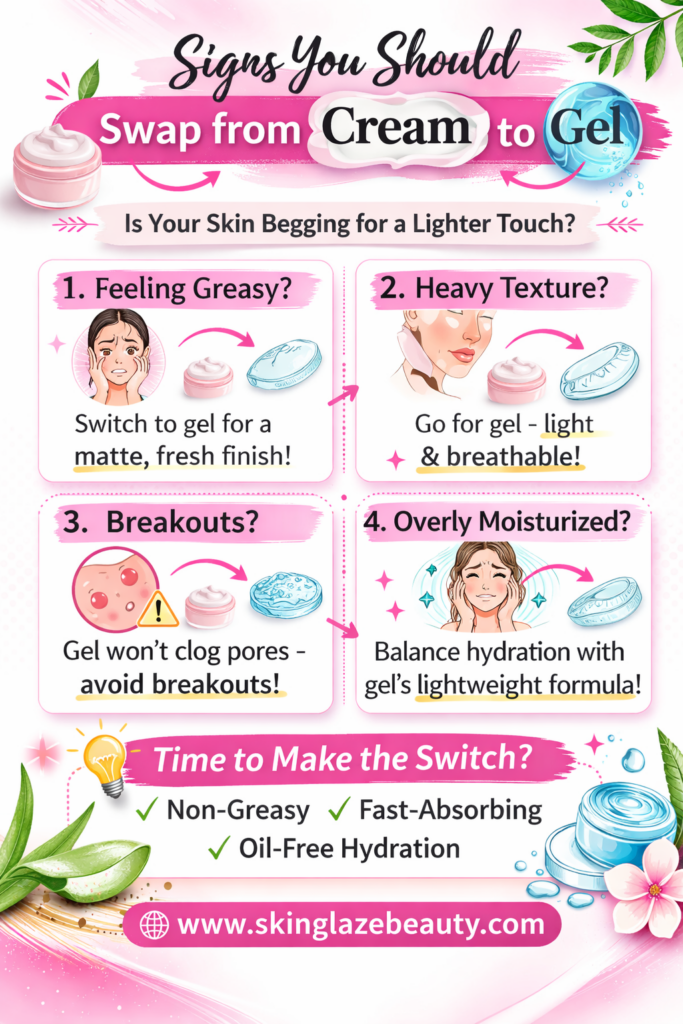
- Feeling Greasy: If your skin feels oily or greasy shortly after applying your cream, it may be time to switch to a gel-based formula. This is particularly true during warmer months when your skin is naturally producing more oil.
- Heavy Texture: If your cream feels too thick and suffocating on your skin, causing discomfort, it’s a sign that your skin may prefer a lighter texture, such as a gel.
- Breakouts: If you start experiencing more breakouts or clogged pores, your heavy cream may be contributing to excess oil buildup. Gels can provide hydration without clogging pores.
- Skin Feeling Overly Moisturized: When your skin feels over-hydrated or looks shiny after applying your cream, it’s time for a change. Gels hydrate while keeping your skin balanced.
To gradually incorporate gels into your routine, start by replacing your cream with a gel-based serum or light moisturizer during the day. You can keep your heavier cream for nighttime use, especially if you have dry skin that requires extra nourishment while you sleep.
How to Make the Switch
Switching from creams to gels doesn’t have to be complicated. Here are some tips to ensure a smooth transition:
- Start with a Gel-Based Serum: If you’re used to thick creams, start by replacing your regular cream with a gel-based serum. These serums are often concentrated with beneficial ingredients and can hydrate without leaving your skin feeling greasy.
- Follow with a Gel Moisturizer: Pair your serum with a lightweight gel moisturizer. Look for gels that contain soothing and hydrating ingredients like aloe vera, hyaluronic acid, or cucumber.
- Use Gel Mask Treatments: Once a week, treat your skin to a hydrating gel mask for an extra dose of moisture without the heaviness.
- Gradually Adjust: For those with drier skin, you may want to start by using a gel during the day and a cream at night. This way, you can ease into the change without losing the benefits of both products.
Additional Seasonal Skincare Tips
To get the most out of your seasonal skincare in New Town, Kolkata, here are a few tips:
- Hydrate, Hydrate, Hydrate: Regardless of the season, keeping your skin hydrated is key to a healthy complexion. Drink plenty of water and use hydrating products that suit your skin’s needs.
- Sunscreen is a Must: No matter the season, never skip your sunscreen. UV rays can damage your skin year-round, even in winter, so apply a broad-spectrum sunscreen daily.
- Adjust for Your Skin Type: Tailor your skincare routine to your skin type and the climate. If you live in a dry climate like parts of California, your skin might need richer products year-round. In more humid areas, switch to lighter gels during warmer months.
Seasonal swaps are essential to maintaining healthy, balanced skin year-round. By understanding how your skin reacts to different climates and adjusting your skincare accordingly, you can ensure your skin remains hydrated, glowing, and protected. Whether it’s swapping your heavy cream for a refreshing gel or vice versa, the key is to listen to your skin’s needs.
At Skin Glaze, we’re here to help you navigate the best seasonal skincare choices for your skin type. Are you ready to transition your routine? Book an appointment today and let us help you achieve radiant, healthy skin all year long.
People Also Ask
Can I use a gel moisturizer if I have dry skin?
Yes, you can! If you have dry skin, look for gels with hydrating ingredients like hyaluronic acid or aloe vera to ensure your skin stays moisturized.
How do I know if it’s time to switch to a gel?
Signs include feeling greasy after moisturizing, experiencing breakouts, or your skin feeling heavy or weighed down by your cream.
Can I use gel skincare products at night?
Yes, you can! Gel-based products are great for night care, especially if you have oily or combination skin, offering light hydration without excess oil.
Can I mix creams and gels in my skincare routine?
Absolutely! You can use a gel moisturizer during the day for hydration and a cream at night for extra nourishment, especially in winter or if your skin is dry.
Are gel-based products effective for anti-aging?
Yes, some gel moisturizers contain active ingredients like hyaluronic acid, which can help with hydration and plumpness, contributing to anti-aging benefits.